




Если вы живете в округе Талса, вы, вероятно, заметили, что наша погода любит держать нас в напряжении. От неожиданных похолоданий до жаркого и влажного лета — знание вашей зоны морозостойкости растений может иметь решающее значение для вашего сада. Понимание зоны морозостойкости USDA Талсы поможет вам выбрать растения, лучше подходящие для нашего климата, обеспечив вашему саду долгосрочный успех.
Зона морозостойкости растений по классификации Министерства сельского хозяйства США
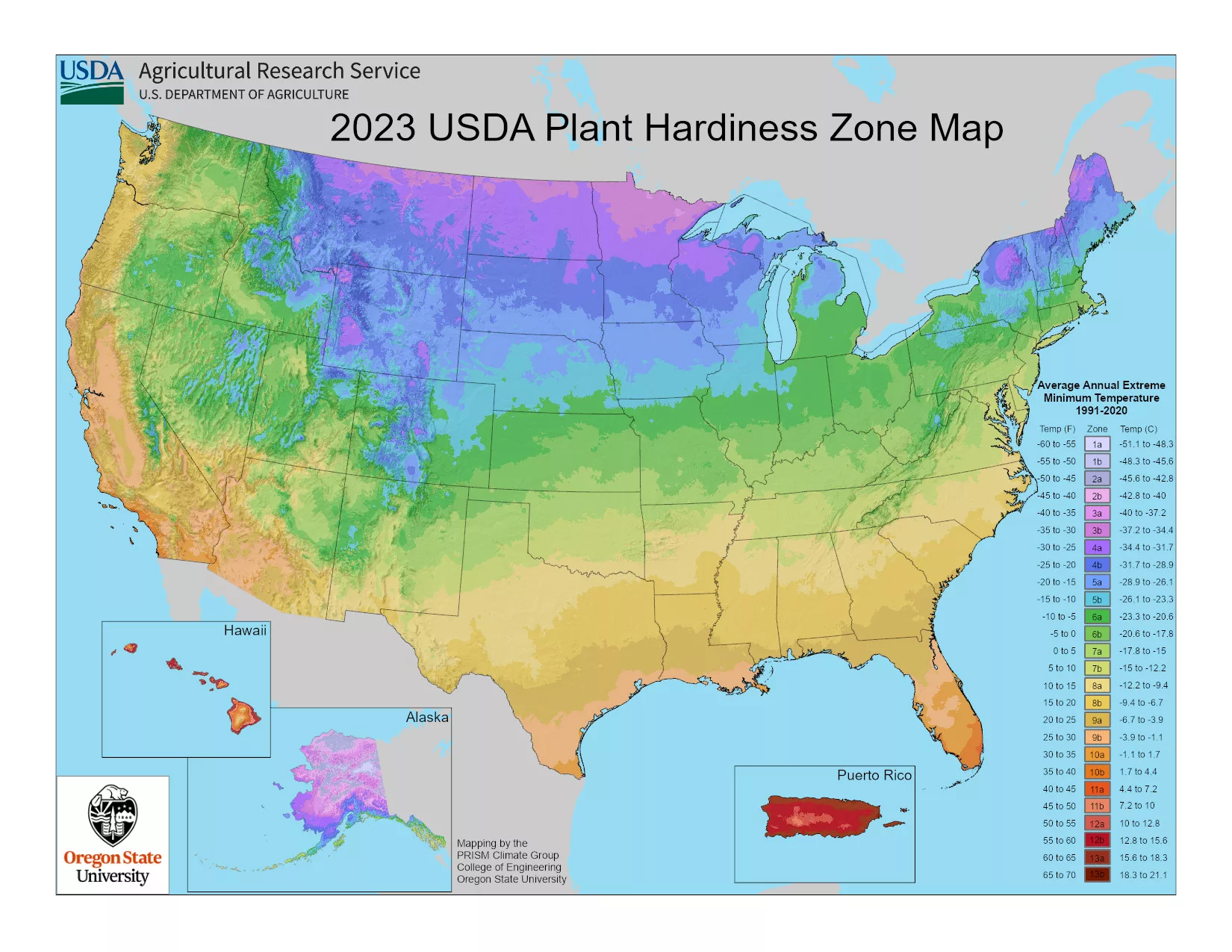
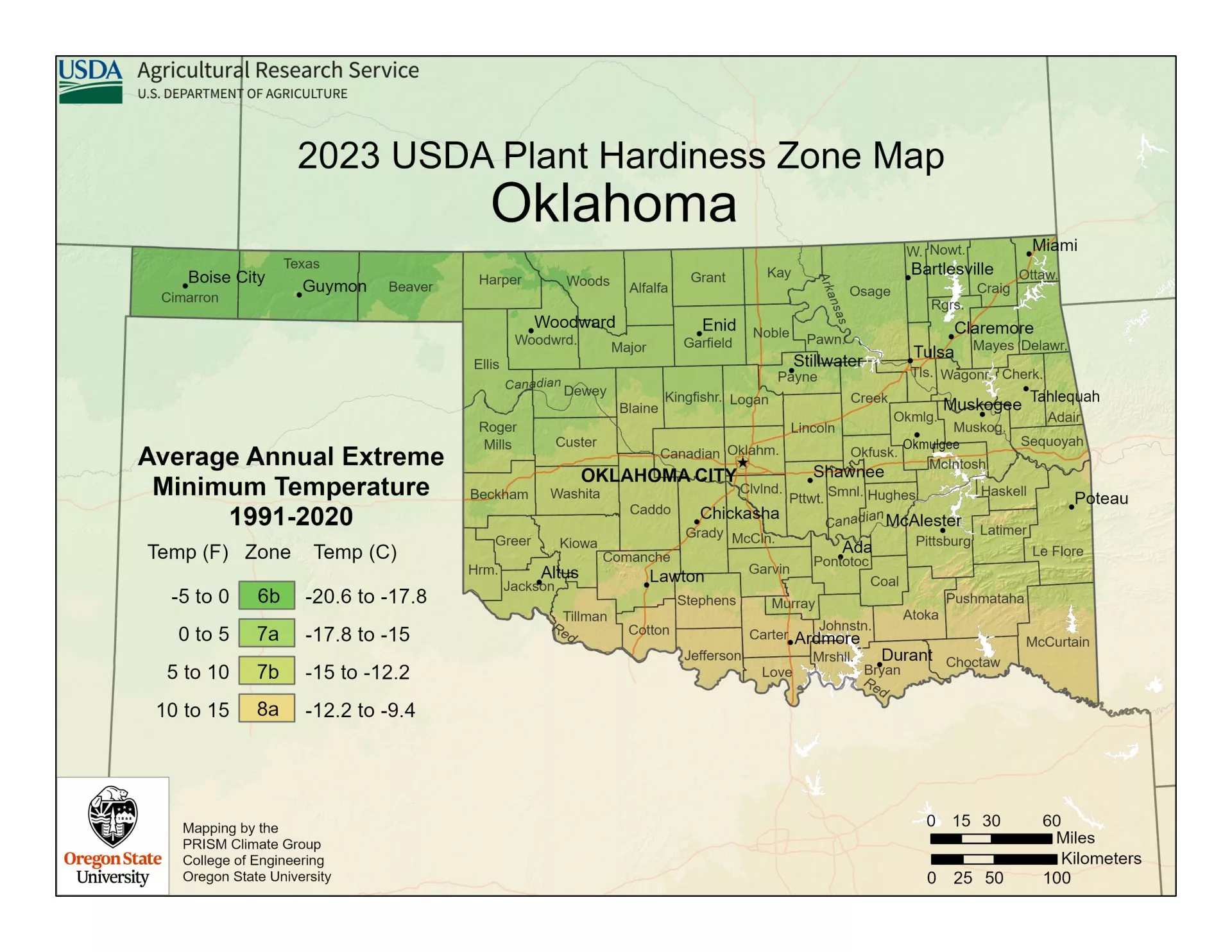
Согласно Карта зон морозостойкости растений Министерства сельского хозяйства США, В основном, территория метрополии Талсы расположена в зоне холодостойкости 7a, а некоторые окружающие районы попадают в зону 6b, где зимние минимальные температуры иногда могут достигать −10°F. Что касается устойчивости к жаре, в Талсе долгие жаркие лета, и город обычно попадает в тепловые зоны 6b–7a, где в среднем бывает 90–120 и более дней в году с температурой выше 86°F, что является важным фактором при выборе жаростойких растений.
Подготовка контейнеров и посадка растений
Всегда очищайте использованные контейнеры перед пересадкой и определитесь с расположением растений в горшке. Закройте дренажное отверстие сеткой или любым проницаемым материалом, например, кофейным фильтром, затем заполните контейнер почвой примерно на 2,5 см ниже края. При необходимости отрегулируйте глубину корневого кома каждого растения так, чтобы верхние корни находились на одном уровне с поверхностью почвы, слегка прижмите каждое растение к земле. В качестве последнего шага тщательно полейте.
Циркуляция воздуха и расстояние между элементами
Возможно, об этом говорят реже, но циркуляция воздуха и расстояние между растениями — важнейшие аспекты успешного садоводства. Если ваши растения расположены слишком близко друг к другу, они могут пострадать от вредителей из-за застоя воздуха. Жара или ветер могут повредить рассаду или саженцы, а гербициды могут переноситься с соседних участков. В качестве решений можно использовать барьеры, ограждения, кустарники, опоры и регулировать расстояние между растениями.
Узнайте о своём солнечном свете
Вы когда-нибудь замечали в питомнике этикетки с надписями «полное солнце» или «полутень» и задавались вопросом, что именно это означает? В следующий раз, когда будете покупать растения, вы можете обратиться к следующей таблице, чтобы убедиться, что можете обеспечить им столько солнечного света, сколько им необходимо.
| Тип Солнца | Часы на солнечном свете |
|---|---|
| Полное солнце | 6 или более часов |
| Частичное солнце | 4-6 часов |
| Частичная тень | 2-4 часа |
| Оттенок | Менее 2 часов |
Также используются следующие термины:
- Легкая тень: рассеянная тень или переменная тень под деревьями с открытой кроной.
- Умеренная тень: преимущественно отраженный свет, например, на лесной подстилке.
- Густая тень: без прямых солнечных лучей.
Земля
Существуют разные типы почв, каждый из которых обладает своими уникальными характеристиками. Знание этих характеристик поможет вам выбрать оптимальный вариант для ваших растений.
- Сэнди: Выщелачивание, сушка, легко обрабатывается, хорошо укореняется.
- Глина: Плохой дренаж, трудно обрабатывать почву, плохое укоренение, плодородная почва.
- Суглинистая почва: Свободное движение воды и воздуха. Хорошее влагоудержание. Плодородная почва, малое сопротивление обработке.
Совет: Органические вещества улучшают песчаные и глинистые почвы.
Проверить, достаточно ли сухая почва для обработки, можно с помощью теста на пропитку. Если вы впервые используете этот участок, возьмите напрокат или одолжите роторный культиватор и перекопайте почву на глубину 30 см. Удалите сорняки, измельчив их мотыгой, перекопав и разрыхлив граблями или выдернув вручную. Добавьте 5 см органических удобрений и тщательно перемешайте их с почвой на участке. Если поверхность достаточно ровная, используйте культиватор типа «Мантис»; в противном случае используйте вилы. Если вы сажаете семена, убедитесь, что текстура почвы более мелкая, чем необходима для рассады.
Заключительные советы по садоводству
- Берите пробы почвы и проводите анализ каждые три-четыре года.
- Вносите удобрения в рекомендованном виде и в рекомендованном количестве.
- По возможности используйте органические материалы, такие как компост.
- Используйте рекомендованные в Оклахоме сорта растений.
- Удаляйте лишние сеянцы на ранней стадии, пока они еще маленькие и за ними легко ухаживать. Таким образом, оставшиеся растения получат достаточно места для полноценного роста.
- Избегайте длительных прогулок или работы в саду, если листья и почва влажные.
Вся информация в этом посте любезно предоставлена программой OSU Extension – Tulsa Master Gardeners. Чтобы узнать больше о программе Tulsa Master Gardeners, посетите сайт... www.tulsamastergardeners.org.